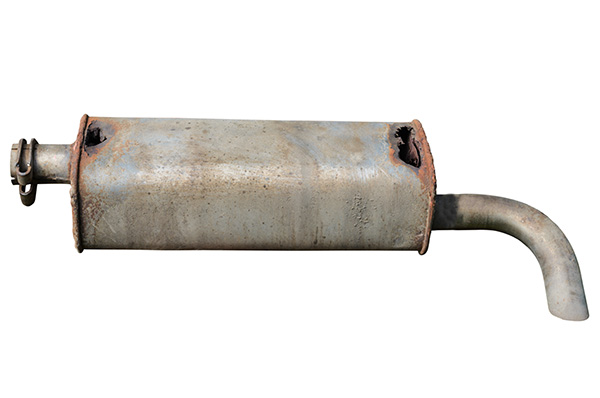
Exhaust parts do a lot of work without much attention. The muffler keeps noise under control, while the catalytic converter cleans up the gases leaving the engine. When either one starts to fail, the car will usually give you a few warning signs before things get really noisy or expensive.
Paying attention to those early hints can keep you safer and protect other parts of the exhaust.
1. Louder Exhaust Noise or New Rattles From the Rear
One of the first signs many drivers notice is a change in sound. The exhaust may get deeper, boomier, or sharper, especially when you accelerate. Sometimes it sounds like the car suddenly grew a performance muffler you never asked for.
If the muffler shell or internal baffles crack, they can rattle and buzz. A loose heat shield or hanger can also create a metallic rattle that changes with bumps or throttle. In the bay, we often find small holes or seams that have opened up from rust, which let exhaust escape before the muffler can quiet it down.
2. Strong Exhaust Smell or Fumes in or Around the Car
A healthy exhaust system routes gases all the way out the back of the car. When the muffler, pipes, or catalytic converter develops leaks, fumes can collect under the floor and sometimes get pulled into the cabin. You might notice a sharp exhaust smell when stopped at a light or when backing up near a wall.
Any exhaust odor inside the car is a real concern, especially if it comes with headaches, dizziness, or a “stuffed up” feeling after driving. Even if the smell seems minor, it is worth having it checked quickly. From a technician’s point of view, sealing those leaks is about safety just as much as noise.
3. Visible Rust, Holes, or Hanging Exhaust Parts
Exhaust components live in a tough environment. Road salt, moisture, and heat cycles all work together to corrode metal over time. If you look under the car and see heavy flaking rust on the muffler, pipes, or catalytic converter shell, that metal is already weakened.
Some visual clues that parts may be near the end of their life include:
- Sections of pipe that look swollen, scaly, or heavily pitted
- Small holes or cracks at seams and welds
- Hangers that have broken, letting parts sag or sit crooked
- A muffler or converter that looks like it is hanging lower than it used to
We have seen many cases where a simple hanger repair or small leak fix, handled early, prevented a more dramatic break where the exhaust dropped or separated on the road.
4. Check Engine Light with Catalytic Converter or O2 Sensor Codes
The catalytic converter is tied directly to how the engine computer manages emissions. When the catalyst stops storing and releasing oxygen the way it should, or when an upstream or downstream oxygen sensor sees odd readings, the check engine light will come on.
You might be dealing with converter issues if you notice:
- A steady check engine light with efficiency or catalyst-related codes
- Codes for oxygen sensors that return quickly after being cleared
- A light that tends to come back after long highway drives
- Inspection or emissions test failures tied to converter performance
From our side, the trick is figuring out whether the converter is worn out, contaminated by long-term misfires or oil burning, or if a sensor or exhaust leak is confusing the readings. Replacing a converter without fixing the root cause is a quick way to end up with the same problem again.
5. Noticeable Loss of Power or Poor Fuel Economy
A clogged or partially melted catalytic converter can restrict exhaust flow. When that happens, the engine has to push harder to breathe, and you feel it as sluggish acceleration, especially on hills or highway on-ramps. Some vehicles feel like they run out of breath at higher rpm, even though the engine sounds normal.
Fuel economy can drop because the engine is fighting backpressure and because the computer may start adjusting fuel trims to compensate. We have seen drivers spend money on tune-up parts and fuel additives, only to find the real issue was a converter that had slowly plugged up after years of running with another problem upstream.
6. Rotten Egg Smell or Excessive Heat Under the Car
A strong rotten egg or sulfur smell from the exhaust is often a clue that the converter is not processing gases correctly. It can come from a mixture issue, fuel quality, or a converter that has been overheated by misfires or raw fuel. Sometimes you will also notice extra heat radiating from under the car after a drive, or even see glowing metal in severe cases, in a dark garage.
Any time you suspect the converter is overheating, it is wise to have the car checked soon. Excessive heat can damage nearby wiring, shields, and even the floor above the exhaust if it is left to continue. It is one of those situations where solving the underlying problem protects several systems at once.
What To Do When You Notice Exhaust or Converter Symptoms
If you catch these signs early, you usually have more options. The best plan is to note when the symptoms happen, such as only at certain speeds, on hills, or after long drives, and share those details with your technician. That information helps target the inspection and testing.
From there, a proper exhaust check means looking at pipes, hangers, and heat shields, listening for leaks, and scanning the engine computer for stored codes and fuel trim data. Sometimes, a simple weld, a new muffler, or a sensor replacement is all that is needed. Other times, a failing converter is the result of another issue that has to be fixed at the same time to keep the new part healthy.
Get Muffler and Catalytic Converter Repair in Houston, TX with The Auto Doc
We inspect exhaust systems every day and know how to tell a minor muffler problem from a catalytic converter that is starting to fail. We can road test your car, check for leaks and restrictions, and explain the smartest repair options before things get worse.
Call The Auto Doc in Houston, TX, to schedule muffler and catalytic converter service so your car stays quiet, safe, and running efficiently.