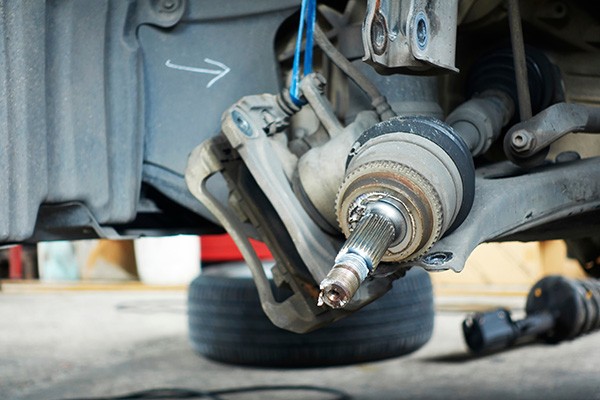
Hearing a clicking sound when turning your car? That rhythmic noise could be coming from the CV joints or axles, and it’s not something to ignore. These components are essential to how your vehicle drives, especially when navigating corners or accelerating. Clicking, popping, or clunking sounds often point to wear that could lead to bigger issues down the road.
Knowing what causes these noises and when to have them inspected can help prevent further damage and keep your car running safely.
What CV Joints and Axles Actually Do
CV stands for “constant velocity.” CV joints are part of the axle shaft assembly and are designed to transfer power from the transmission to the wheels at a consistent speed, even while turning or going over bumps. Front-wheel drive and many all-wheel drive vehicles rely on these joints for smooth operation.
The axle itself is a shaft that connects the wheels to the drivetrain, and the CV joints allow that axle to flex as the wheels turn and move up and down with the suspension.
Why You Hear Clicking During Turns
One of the most common signs of a failing CV joint is a clicking or popping noise that gets louder or more frequent when turning. If the outer joint is worn or damaged, the internal bearings may begin to bind or move unevenly, especially under the stress of a tight corner. This clicking usually speeds up with your car’s movement.
Over time, the protective boot around the joint can crack or tear. When that happens, grease leaks out, and dirt and moisture can get in. Without lubrication, the joint wears faster, leading to noise and, eventually, failure.
Clicking While Accelerating or Driving Straight
If you notice a clicking sound even when driving in a straight line, it could indicate damage to the inner CV joint. While outer joints typically click when turning, the inner ones can make noise during acceleration or under heavy engine load. In some cases, it may feel like a vibration or shudder in the steering wheel or floorboard.
This is often a sign that the entire axle shaft assembly is wearing unevenly or has a damaged bearing.
What Happens If You Ignore It
When left untreated, a worn CV joint can eventually break. If this happens, your car may lose the ability to transfer power to the wheels, leaving you stranded. Even if the joint doesn’t fail completely, it can begin to affect other parts of the suspension and drivetrain due to excess vibration and movement.
In some cases, the damaged boot can also throw grease around the wheel area, making a mess and attracting debris that wears other components prematurely.
Other Sounds That Can Be Misleading
Not all clicking sounds come from the CV joints. Loose lug nuts, worn suspension parts, or brake components can also produce similar noises. A faulty wheel bearing or a damaged strut mount may sound like a clicking or popping under certain conditions. That’s why it’s important to have a technician properly inspect the car and pinpoint the exact source of the noise.
A visual inspection of the CV boots can sometimes show obvious signs of wear or grease leakage, but internal damage usually requires a lift and full axle check.
How a Technician Diagnoses the Problem
To accurately identify CV joint or axle problems, a technician will check for movement in the shaft, inspect the boots for cracks or splits, and rotate the wheels while listening for noise. They may also test drive the vehicle to determine when the clicking occurs and under what conditions.
If the CV joint is damaged but the axle shaft is still in good shape, it may be possible to replace just the joint. In many cases, however, shops will recommend replacing the entire axle assembly to avoid future problems and ensure balanced wear.
Replacement vs Repair
Most technicians will suggest full axle replacement instead of rebuilding a worn joint. This is often more cost-effective in the long run, especially since new axle assemblies are designed to last for many years under normal conditions.
If your vehicle uses specialty parts or has a unique drivetrain layout, parts may take longer to source, so it’s better to handle these issues before they become urgent.
Keep Your Car Quiet and Safe with The Auto Doc in Houston, TX
If you're hearing clicking noises when turning or accelerating, don’t ignore them. The Auto Doc in Houston, TX, can inspect your CV joints, axles, and suspension to find the source of the noise and recommend the best fix. Our team can handle everything from simple boot replacements to full axle installations, ensuring your car stays quiet, smooth, and safe.
Schedule an inspection today and drive with confidence.