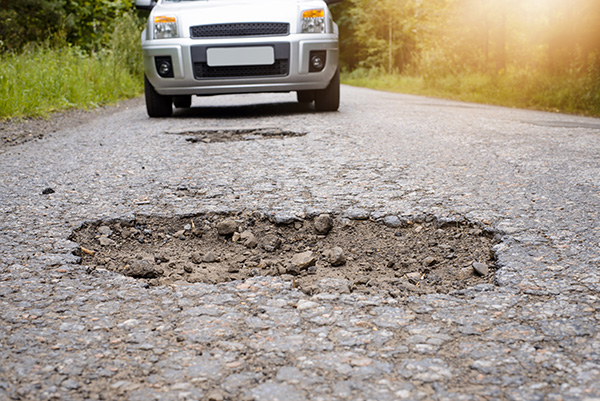
A pothole hit can feel like nothing more than a loud thump. Then a day later you realize you’re holding the steer
ing wheel slightly turned just to keep the car straight. That pull might be mild, but it’s your car telling you something shifted, bent, or loosened up.
Sometimes it’s just an alignment angle that got knocked out. Other times, the pothole started a chain of issues that gets worse the longer you drive on it.
Why A Pothole Can Change The Way The Car Tracks
When a wheel drops into a pothole, it’s not just the tire taking the hit. The impact loads the wheel, tire, and suspension all at once. That force can bend a wheel slightly, damage a tire internally, or jolt alignment angles out of spec. It can also stress steering and suspension joints that were already a little worn.
The pull happens because the tires are no longer pointing and rolling the same way. If one front wheel is angled slightly differently, or one tire has a different rolling resistance, the car will drift toward the side that’s dragging or steering off center.
Alignment Shift Vs Tire Damage
A basic alignment change often feels like a steady drift that stays about the same at most speeds. The steering wheel may sit off-center, and you may notice the car wants to wander more than it used to.
Tire or wheel damage often adds a vibration or a thump that comes and goes with speed. A tire can look fine on the outside but have internal belt damage from the impact. That can create a pull that changes with the road surface, or it may feel worse at highway speed than it does around town.
If the pull starts immediately after the pothole and you also notice a new shake, don’t assume it’s just alignment. A bent rim or a damaged tire can make alignment correction useless until the damaged part is addressed.
Suspension Or Steering Parts That Get Knocked Loose
A hard pothole impact can stress components that control steering direction, especially in the front end. Tie rods, ball joints, control arm bushings, and wheel bearings can all take a hit. If something loosened up, the pull might feel inconsistent. You may feel a slight clunk over bumps, or the steering may feel less direct than before.
One thing we’ve seen is that a pothole can turn a marginal part into an obvious problem. A bushing that was already cracked might tear further. A joint that had some play might develop enough play to affect alignment and handling.
Brake Drag Can Also Create A Pull
It’s less common, but it happens. If the impact shifted something or damaged a splash shield, a brake component can start dragging slightly. A dragging brake caliper or pad can pull the car to one side because one wheel is slowing more than the other.
A clue here is heat. If one wheel smells hot after normal driving, or one wheel has a lot more brake dust than the others, that’s worth mentioning. The pull may also get worse after driving for a while because heat builds up as the brake drags.
What To Watch For In The Days After The Pothole Hit
This is where a lot of drivers miss the window to catch it early. The pull itself is obvious, but other clues matter too.
Pay attention to your steering wheel position. If it’s no longer centered, that’s a strong sign that alignment has shifted. Check your tire pressure as well. A pothole impact can cause a slow leak, and a low tire can pull to that side.
Also watch tire wear. If you keep driving with the pull, you can quickly start scrubbing the tread on one edge. It doesn’t take months. We’ve seen tires take a beating in a surprisingly short time when the toe is off after a pothole.
Owner Mistakes That Make The Pull Worse
The most common mistake is waiting because the car is still driving. Driving with a pull often means you’re scrubbing the tires and stressing parts that are already compromised. Another mistake is assuming an alignment is the only fix, then ignoring a bent wheel or a damaged tire. If you align a car with a wheel or tire issue, it may still pull, and you’ll be frustrated that the alignment didn’t help.
We also see drivers compensate by holding the wheel turned all the time. That can make you less aware of how quickly the situation is changing. It’s better to treat it as a sign that something is off and get it checked sooner.
A Practical Plan To Get It Back Straight
A good approach starts with the basics: check tire pressure and inspect the tires and wheels for impact damage. Then verify alignment angles and steering wheel centering. If there’s any vibration, we check wheel balance and look for runout that points to a bent rim or tire issue.
We’ll also inspect steering and suspension for play, because a loose joint can make alignment unstable. The goal is not just to set alignment numbers, but to confirm the vehicle can hold those numbers and drive straight afterward.
Get Alignment And Suspension Service in Houston, TX with The Auto Doc
If your car started pulling after a pothole hit, we can inspect the tires and wheels, check alignment, and look for steering or suspension damage that could be causing the drift. We’ll explain what we find and help you fix the true cause, so you’re not chewing up tires or fighting the steering every day.
Book your service at The Auto Doc in Houston, TX, and we’ll help you get the car tracking straight again.